our approach
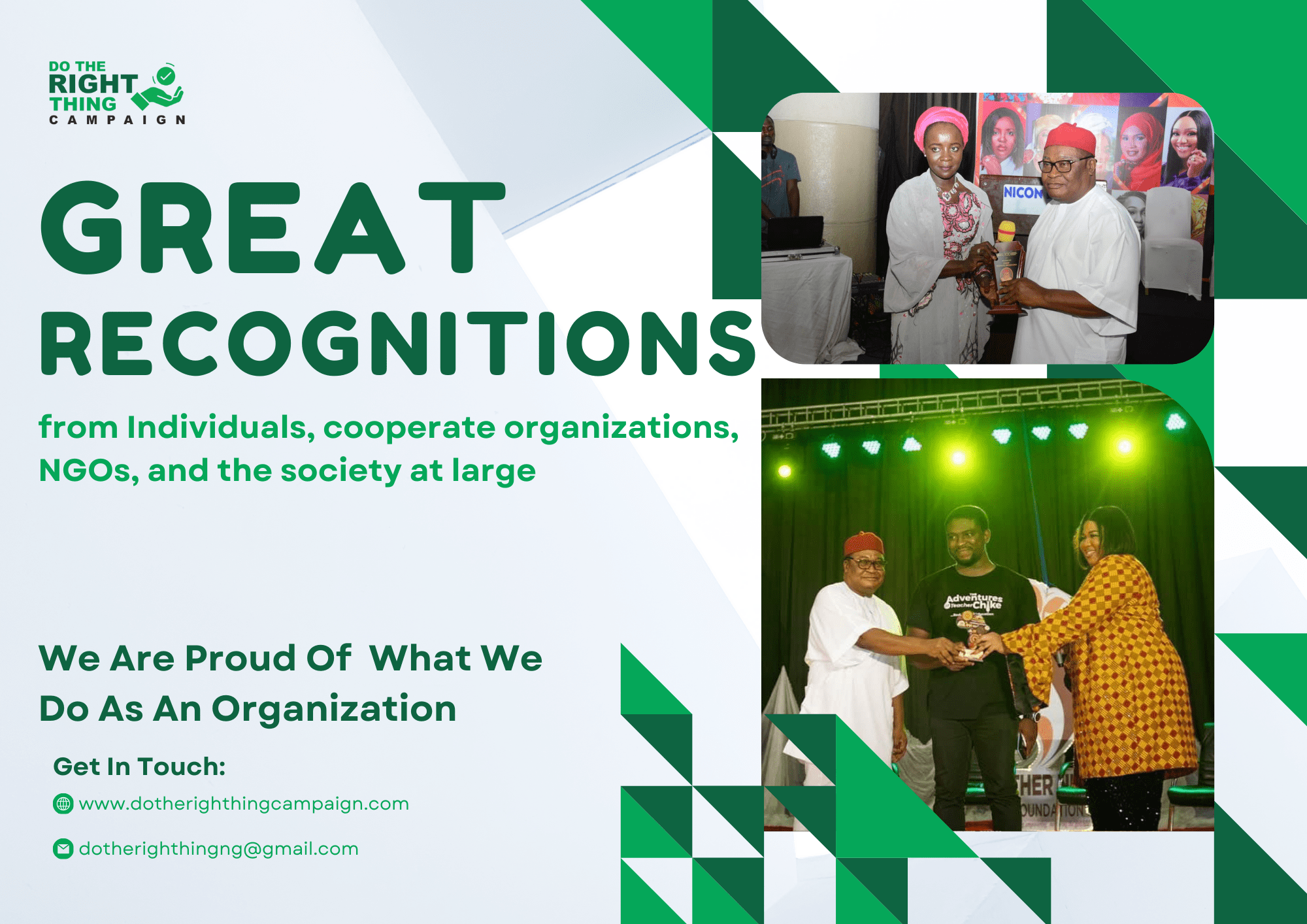
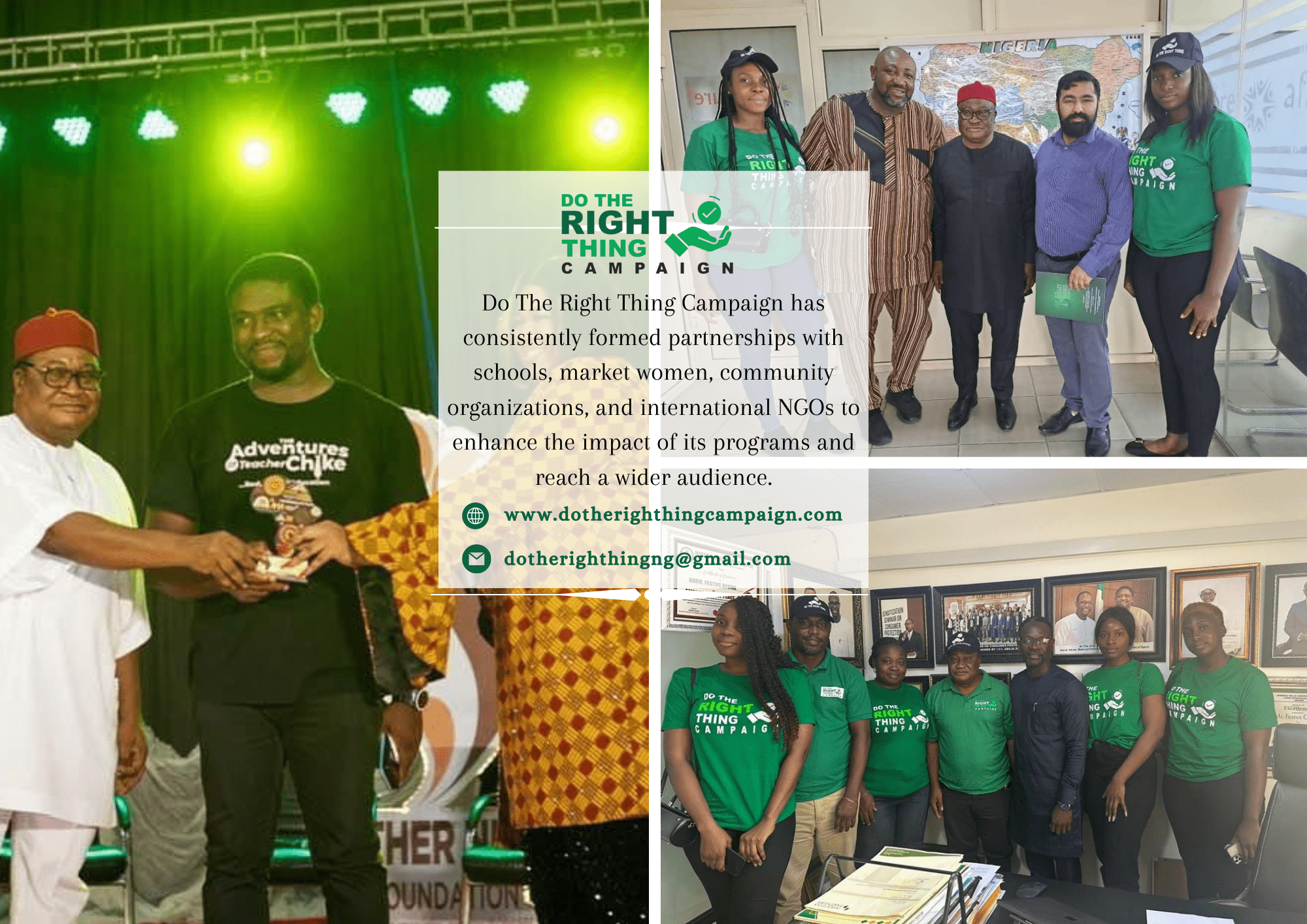
Do The Right Thing Campaign has been adopted and embraced by various citizens, communities, institutions, and stakeholders, reflecting the widespread recognition of its mission to promote ethical behavior, social responsibility, and community engagement among the youths, women and men alike. Here’s a summary of how our adoption has unfolded and the impact it has created:
Community Adoption
Grassroots Support
- Local Engagement: Communities across Nigeria have welcomed the campaign, participating enthusiastically in workshops, community service projects, and educational programs.
- Community Leaders: Local leaders and influencers have endorsed the campaign, helping to spread its message and ensure the successful implementation of its initiatives.
Youth Involvement
- Student Participation: Thousands of students have actively participated in our programs, joining integrity clubs, attending workshops, and engaging in community service projects.
- Youth Ambassadors: Many young people have taken on ambassador roles, promoting the campaign’s values and encouraging their peers to do the right thing.
Institutional Adoption
Schools and Educational Institutions
- Curriculum Integration: Several schools have integrated our ethical education modules into their curricula, ensuring that students receive consistent messages about integrity and responsibility.
- Support from Educators: Teachers and school administrators have become key partners, helping to deliver our programs and reinforcing ethical behavior in the classroom.
Government and Policy Makers
- Policy Endorsement: Government bodies and policymakers have recognized the importance of our mission, incorporating elements of our programs into broader educational and youth development policies.
- Funding and Support: Some governmental agencies have provided funding and logistical support, helping to expand our reach and impact.
Organizational Adoption
Corporate Partners
- Corporate Social Responsibility (CSR): Various companies have adopted the Do The Right Thing Campaign as part of their CSR initiatives, providing financial support, resources, and volunteer participation.
- Workplace Ethics Programs: Some corporations have used our materials to enhance their internal ethics training programs, promoting a culture of integrity within their organizations.
Non-Governmental Organizations (NGOs)
- Collaborative Efforts: Other NGOs have partnered with us to deliver joint programs, share resources, and amplify our collective impact on youth and communities.
- Shared Mission: Organizations with similar missions have adopted our strategies and materials, creating a broader network of ethical education and social responsibility efforts.
Impact of Adoption
Enhanced Reach and Impact
- Broader Audience: Adoption by various stakeholders has significantly broadened our reach, allowing us to impact more young people and communities.
- Sustainable Initiatives: The support from diverse sectors ensures the sustainability and longevity of our programs, enabling continuous positive impact.
Increased Awareness and Advocacy
- Public Awareness: Widespread adoption has heightened public awareness about the importance of ethical behavior and social responsibility.
- Advocacy Success: The endorsement from influential stakeholders has strengthened our advocacy efforts, leading to more robust policies and community practices.
Empowered Youth
- Leadership Development: Through widespread adoption, more young people have access to leadership development opportunities, preparing them to become ethical leaders in their communities.
- Positive Behavioral Change: The consistent reinforcement of ethical values has led to observable positive behavioral changes among youths, contributing to a more just and responsible society.
The adoption of the Do The Right Thing Campaign by communities, institutions, and organizations has been pivotal in advancing our mission to foster ethical behavior, social responsibility, and community engagement among the people. This broad-based support has amplified our impact, ensuring that more young people are empowered to make ethical decisions and contribute positively to their communities. As our campaign continues to grow, we remain committed to our vision of creating a society grounded in integrity and responsibility, and we invite more partners to join us in this vital endeavor.
why do the right thing?
Do The Right Thing Campaign is dedicated to fostering a culture of integrity, responsibility, and ethical behavior among young people. The question of “Why Do The Right Thing?” is central to the NGO’s mission, highlighting the importance of ethical conduct and the positive impact it has on individuals and society as a whole. Here’s why Do The Right Thing Campaign is essential:
1. Promoting Ethical Behavior
- Foundation of Society: Ethical behavior is the cornerstone of a healthy, functioning society. By promoting integrity and honesty, the Do The Right Thing Campaign helps build a society where trust, fairness, and justice prevail.
- Personal Development: Instilling ethical values in youths contributes to their personal growth, helping them become responsible, trustworthy, and respected individuals.
2. Combating Social Issues
- Fraud and Corruption: The campaign addresses issues of fraud and corruption by educating young people about their harmful effects and promoting transparency and accountability.
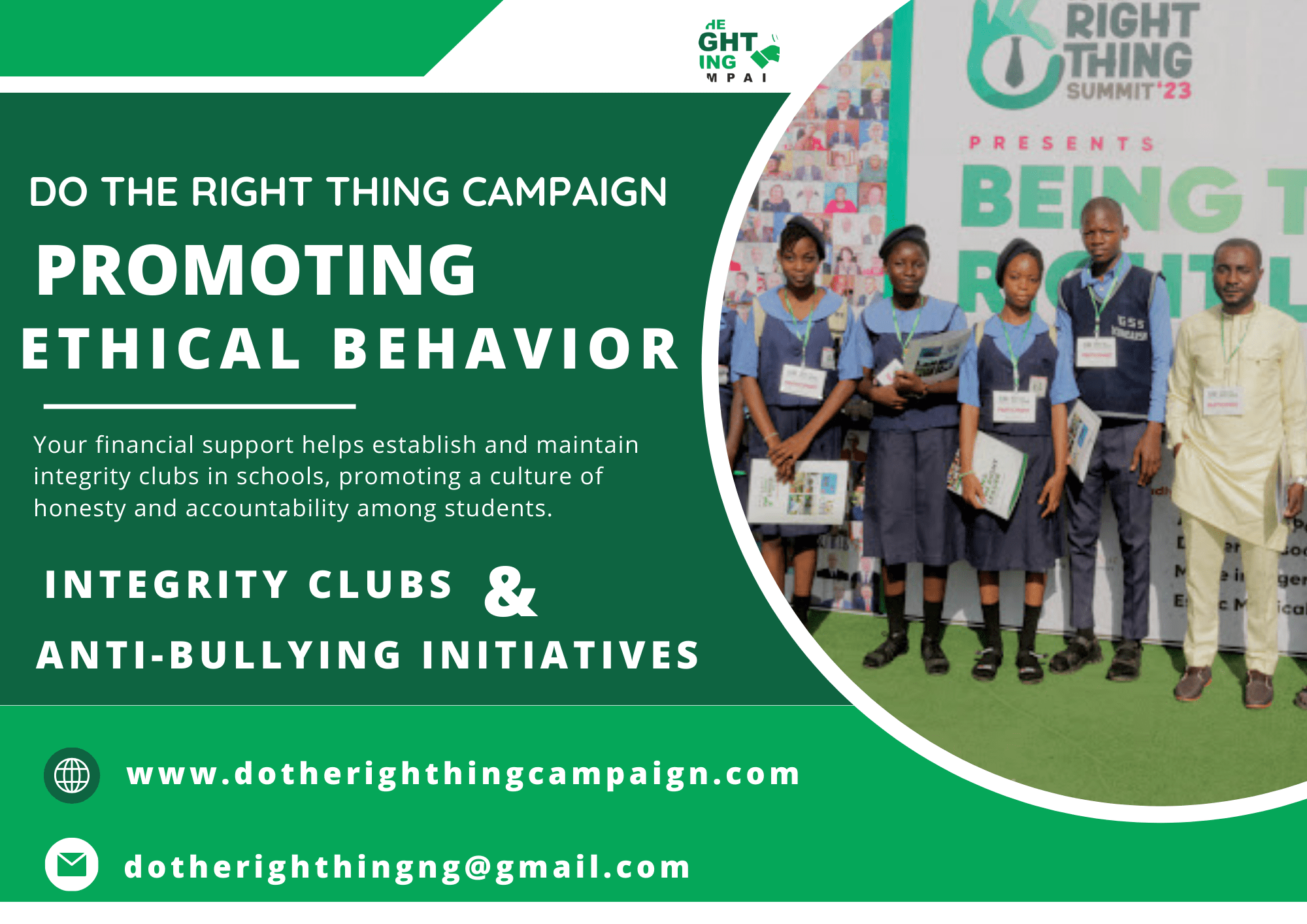
- Bullying and Violence: Anti-bullying initiatives create safer, more inclusive school environments, reducing incidents of violence and promoting a culture of kindness and empathy.
- Pre-Marital Sex: Through comprehensive sex education, the campaign encourages responsible sexual behavior, reducing the risks of teenage pregnancies and sexually transmitted infections.
3. Enhancing Academic Integrity
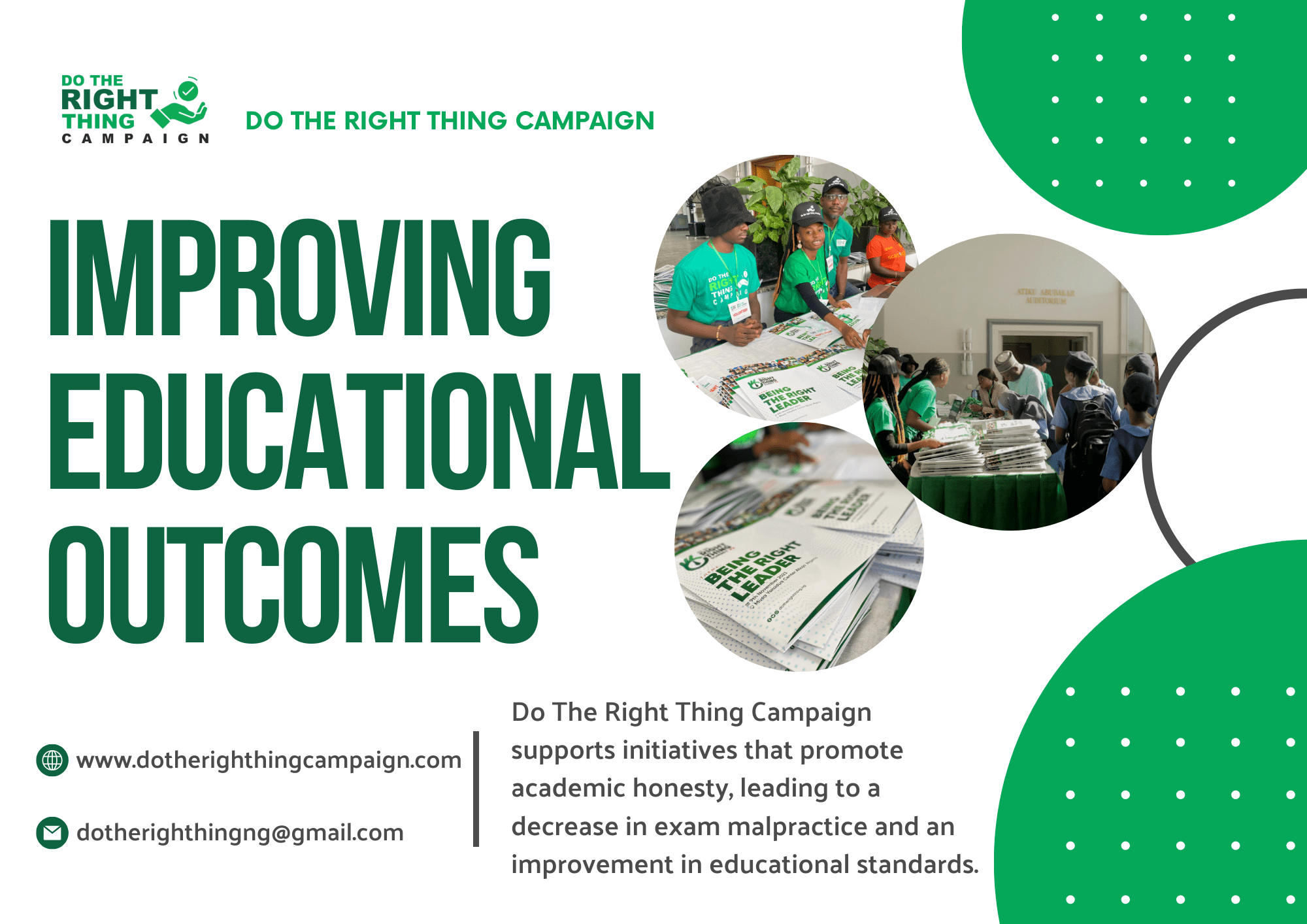
- Combating Exam Malpractice: By promoting academic honesty, the campaign helps maintain the integrity of the educational system, ensuring that qualifications are earned fairly and reflect true abilities.
- Encouraging Hard Work: Fostering a culture of academic integrity encourages students to value hard work and perseverance, essential traits for long-term success.
4. Empowering Youths
- Leadership Skills: Programs that focus on leadership and ethical decision-making empower young people to take on leadership roles in their communities and advocate for positive change.
- Critical Thinking: Teaching critical thinking and decision-making skills helps youths navigate complex situations and make informed, ethical choices.
5. Building Stronger Communities
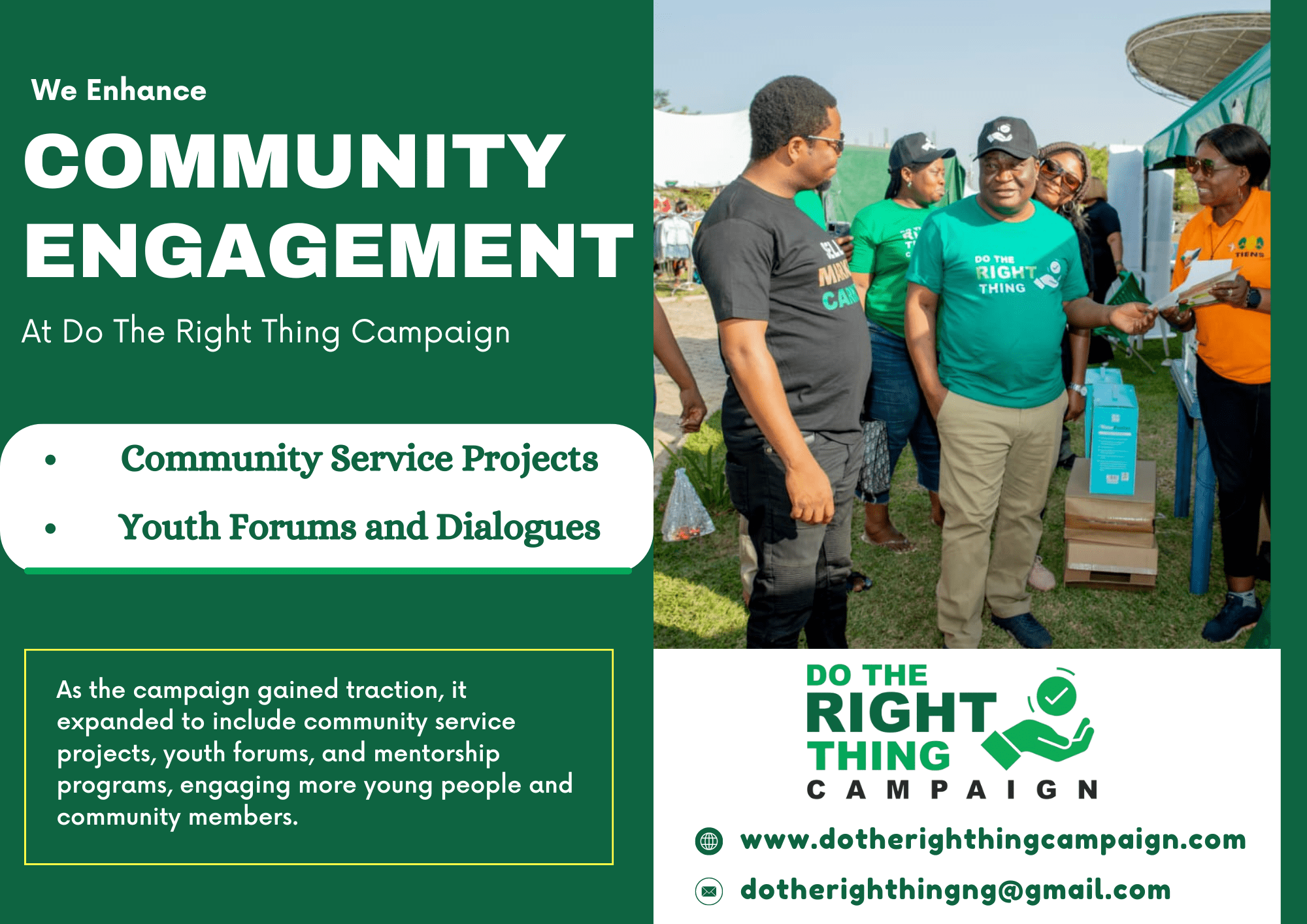
- Community Engagement: The NGO’s initiatives encourage young people to engage in community service and civic activities, fostering a sense of responsibility and community spirit.
- Social Cohesion: Promoting ethical behavior and social responsibility helps build cohesive, supportive communities where everyone feels valued and respected.
6. Long-Term Impact
- Sustainable Development: By addressing ethical behavior and social issues at the root, the Do The Right Thing Campaign contributes to the sustainable development of societies. Educated, ethical individuals are more likely to contribute positively to economic, social, and environmental development.
- Future Generations: Instilling ethical values in today’s youth ensures that future generations will continue to uphold these principles, creating a lasting legacy of integrity and responsibility.
Key Initiatives and Programs
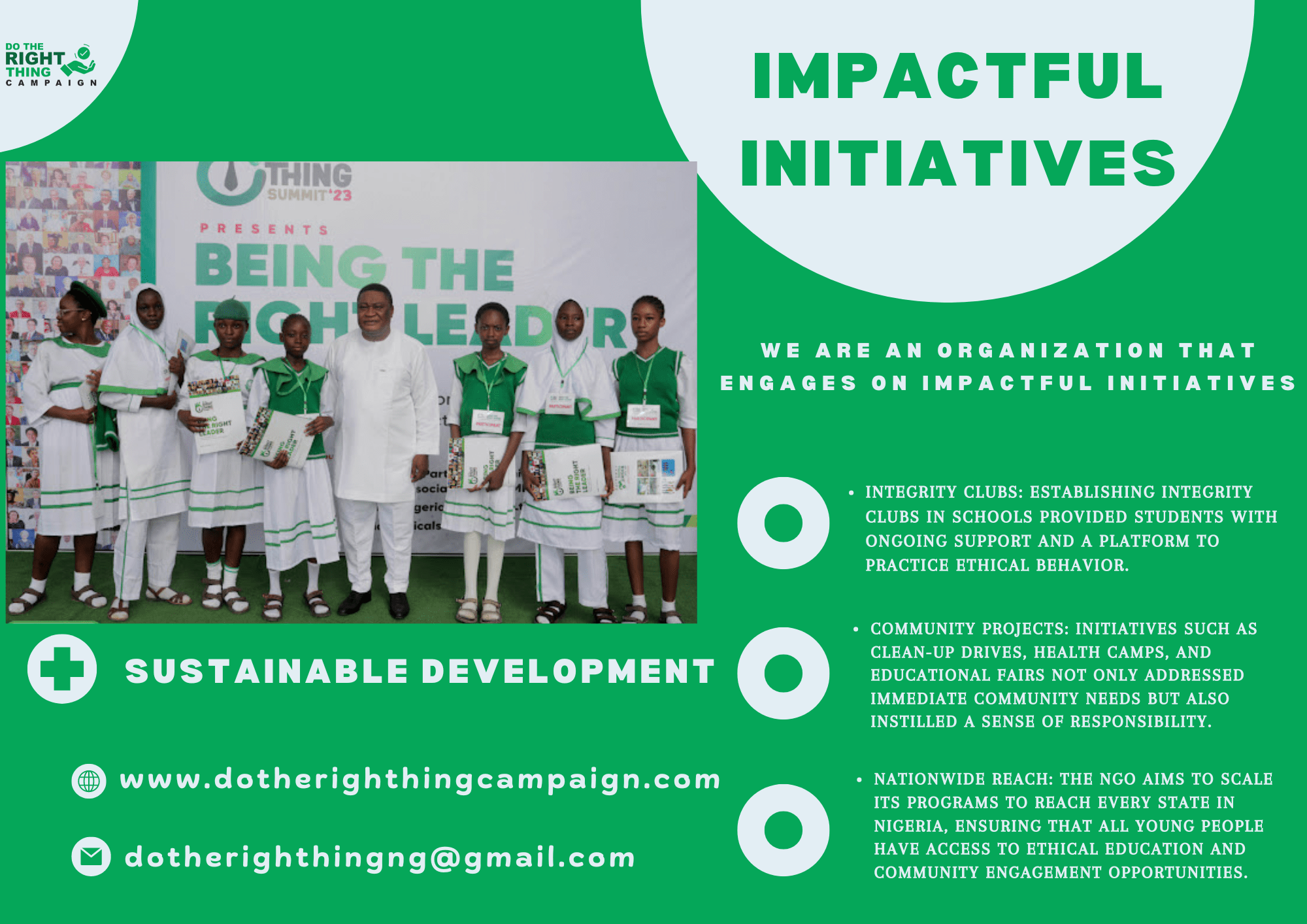
- Educational Workshops: Conducting workshops in schools to educate students about ethical behavior, academic integrity, and the consequences of fraud, pre-marital sex, and bullying.
- Mentorship Programs: Connecting youths with mentors who provide guidance, support, and positive role models.
- Community Projects: Involving youths in community service projects that promote social responsibility and community engagement.
- Advocacy and Policy Work: Advocating for policies that support ethical education and protect the rights and well-being of young people.